Zimbabwe host India in the 1st T20I on Thursday, 23 July 2026, at Harare Sports Club. First ball is listed for 4:30 PM IST, with Shreyas Iyer named captain of a heavily refreshed Indian side and Sikandar Raza leading the home team.
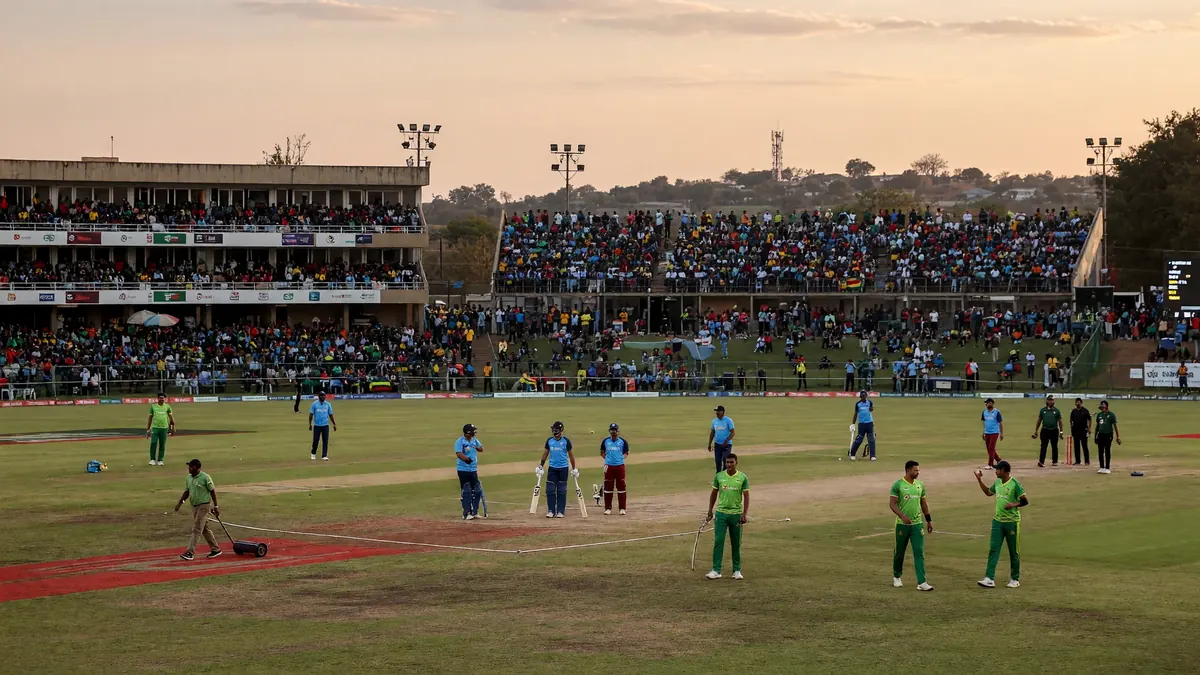
The fixture is the opening night of India's white-ball stop in Harare, and the squad story sits above the usual bilateral noise. Match preview reporting published on 22 July notes that only four players from India's T20 World Cup 2026 winning group feature in the current party. That single detail reshapes how the evening should be read: less a roll-out of a settled champion core, more a live audition under lights.
Broadcast listings place television coverage on Unite8 Sports and DD Sports, with live streaming on FanCode. Fantasy users locking sides on Bettilt11 still need the toss graphic and the confirmed XIs before finalising captaincy, because bilateral openers regularly shuffle one bowling slot after a final look at the surface.
India's projected XI in the same preview reads Abhishek Sharma, Vaibhav Sooryavanshi, Ishan Kishan (wicketkeeper), Shreyas Iyer (captain), Tilak Varma, Shivam Dube, Harsh Dubey, Ravi Bishnoi, Prince Yadav, Ashok Sharma and Mayank Yadav. The top six is stacked for pace and range-hitting. The bowling group is younger and thinner on caps.
That imbalance is the editorial hinge of the night. Among the projected bowling names, only Ravi Bishnoi is described as having played more than twenty T20 internationals. The rest — Prince Yadav, Ashok Sharma, Mayank Yadav, plus spin-allround support from Harsh Dubey — bring upside without the muscle memory of a long international ledger. Field placements, death variations and mid-innings tempo will therefore look less automatic than in a World Cup final XI.
Iyer's presence as captain and middle-order anchor is the stabilising counterweight. He is the senior decision-maker on a night when several teammates are still collecting international mileage. If India bat first, his job is to keep the middle overs honest once the hard ball softens. If India chase, he becomes the bridge between a powerplay burst and a finish that Dube or Tilak can close.
For fantasy construction, the rebuild argument cuts two ways. Indian batting names still carry the higher public ceiling because the top order is full of ball-strikers. Indian bowling names, outside Bishnoi, behave more like boom-or-bust differentials. Ownership that blindly fills five India bowling slots is treating reputation as form. The evidence in the preview points the other way: bat deep from India, then mix the ball with at least one Zimbabwe option who knows the venue.
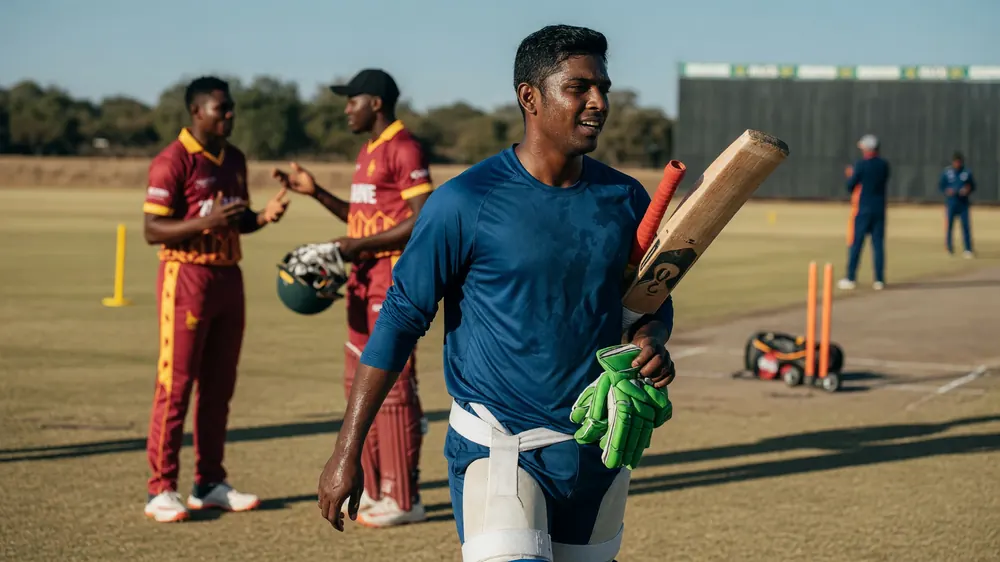
Zimbabwe's probable side is listed as Ben Curran, Brian Bennett, T. Marumani (wicketkeeper), Sikandar Raza (captain), Dion Myers, Ryan Burl, Brad Evans, Wessly Madhevere, Richard Ngarava, Milton Shumba and Blessing Muzarabani. The spine is familiar to anyone who has followed Zimbabwe's recent white-ball sides: Raza's all-round control, Burl's left-arm options and finishing role, Ngarava's left-arm pace, and Muzarabani's height.
Preview notes flag Brian Bennett as a batter to watch and Blessing Muzarabani as a primary bowling threat. That pairing maps cleanly onto home advantage. Bennett can punish lengths that drift into the pads when India try to bowl back of a length with a new ball that is still hard. Muzarabani can extract the uneven bounce the ground report associates with Harare Sports Club, especially if humidity helps the seam stand up in the first three overs.
Raza remains the tactical centre. He can bat through a middle-order squeeze, bowl overs when India look to manufacture against spin, and set fields with local knowledge of which end holds up when the ball softens. Brad Evans and Madhevere add flexible overs; Ngarava gives a different angle with the new ball. None of that turns Zimbabwe into pre-match favourites on pure batting depth, but it does create a path to early wickets and a defendable total if India misfire in the powerplay.
Fantasy users who only stack India names leave value on the table. Bennett is a classic opposite-team differential when public captaincy floods toward Abhishek Sharma or Iyer. Muzarabani is a sensible bowling pickup in head-to-head contests where a single new-ball wicket swings the margin. Burl is the dual-threat hedge if he bowls full overs and bats inside the top seven.
The ground notes attached to the preview describe Harare Sports Club as a slow deck that breaks down as the match progresses, with humid conditions and occasional uneven bounce. Scoring is easier while the ball is hard. That is a short brief, but it is enough to reverse several default T20 habits.
First, the powerplay becomes the highest-variance phase. Batters who clear the infield while the ball is still hard protect their strike rate before the surface grips. Openers and the number three therefore hold a higher ceiling than finishers who arrive after the twelfth over to a softer ball and a slower outfield.
Second, spin gains traction in the middle overs. Wrist-spin from Bishnoi, left-arm options from Burl, and part-time overs from Madhevere or Harsh Dubey all benefit if batters are forced to manufacture against a ball that sticks. That does not mean five spinners; it means one locked spinner who will bowl in the period when the pitch is least true.
Third, tall seam is not wasted. Muzarabani's height, and any India quick willing to hit a hard length, can create false shots without needing extreme pace. On uneven bounce, the mistimed pull and the leading edge appear more often than clean drives through cover.
Captains still have a real toss decision. Batting first trusts death bowling on a two-paced surface. Chasing trusts a clearer par number once the evening has shown how much the ball is holding. Neither path is automatic from the written brief alone. What is automatic for fantasy is role clarity: early batters first, one spinner who owns the middle, and seamers selected for length control rather than raw reputation.
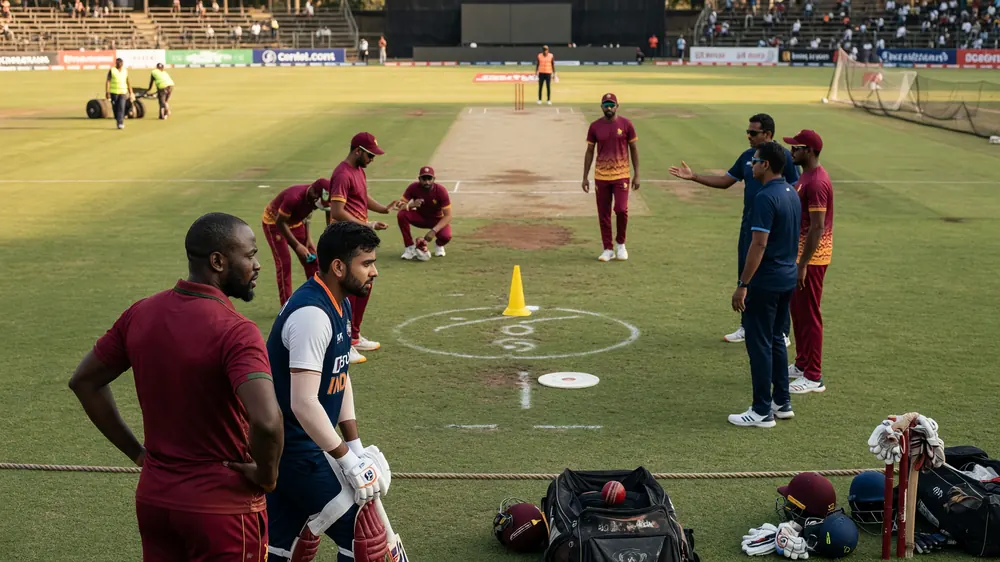
Preview coverage cites a T20I head-to-head sample of fourteen matches with India on eleven wins and Zimbabwe on four, with no no-results listed in that rundown. Historical lean explains why public fantasy sides will tilt toward Indian batters and why market pricing starts with India as favourites.
It should not erase venue-specific risk or the experimental nature of this Indian group. Several past meetings used different personnel. A side with a strong ledger can still drop a chase if the fifth-bowler over leaks runs, and a home attack that knows which end to use in humidity can create a short burst of wickets that flips a modest total into a defendable one. Treat the record as background colour, not a substitute for tonight's confirmed roles.
The same match notes single out Abhishek Sharma and Brian Bennett with the bat, and Prince Yadav and Blessing Muzarabani with the ball. Mapped onto Bettilt11 team builds, those four roles look like this.
Projected India opener with a high ceiling if he faces the hard new ball. Primary captaincy path in smaller contests when ownership is not already saturated. Needs intent in the first six overs to justify the salary on a slowing surface.
Zimbabwe top-order batter flagged for impact against India. Low-to-mid ownership differential if public sides ignore home batters. Pays off when he takes the powerplay rather than accumulating against spin later.
Young India quick highlighted in the bowling watchlist. Volatile fantasy asset: attractive as a second seamer if he shares the new ball or bowls a hard length into the pitch, less attractive if he is limited to slog-over speculation only.
Standout Zimbabwe quick in the preview's bowling notes. Height plus local reading make him the cleanest opposite-team bowling pickup, especially if humidity aids early movement.
Secondary checks once the official sheet drops: Ravi Bishnoi for middle-over wickets if the ball starts gripping; Shivam Dube if India need left-hand power through the leg side; Ryan Burl for dual points if he bowls and finishes; Ishan Kishan if he keeps and walks out inside the first four overs; Tilak Varma if he holds the number five bridge role rather than a pure finisher brief.
India still carry the stronger batting paper, even with a young bowling unit, but Harare's slower middle phase will test whether that attack can defend a total or choke a chase.Editorial reading of the 22 July match preview
The published prediction leans India for the 1st T20I, citing batting firepower even while acknowledging the green bowling unit. That is a coherent reading of the listed XIs: India's top six outguns Zimbabwe's on pure striking range, provided the innings is not strangled after the tenth over.
Fantasy response should still separate match winner from points winner. A comfortable India batting night can be built around two top-order hits and one spinner. A sticky night where Muzarabani strikes early and Raza slows the middle rewards the balanced build: one India opener, one Zimbabwe batter, Bishnoi or Burl for spin, and a tall seamer from either side.
Practical captaincy paths that fit the verified brief:
Leave one flexible slot until the toss. If India bowl first on a fresh surface, prioritise new-ball options. If Zimbabwe chase and the ball starts to skid under lights, lean toward batters who win free hits when pace-on arrives. Keep stake sizes modest on a series opener with experimental personnel; form samples for several of the projected India bowlers remain thin at this level.
Three live signals matter more than any pre-match table. Who bowls the first over from each end will show whether captains trust height and bounce or lateral movement. Who faces the first four overs will confirm whether Abhishek and Bennett actually own the hard-ball window the pitch brief rewards. Who bowls overs twelve to sixteen will reveal whether spin or seam is winning the middle phase once the surface breaks down.
Those answers feed the next selection conversation for the remainder of the tour. A clean India batting night freezes most of this XI. A game decided by fifth-bowler overs or early Zimbabwe strike power forces a harder look at bowling depth before the next fixture. Until official XIs are posted at the toss, treat every probable list as a planning sheet rather than a locked card.
For confirmed lineups, result fallout and role shifts as the Harare stop unfolds, follow the Bettilt11 Cricket News desk.
Schedule, streaming, pitch notes and fantasy focus for the Harare opener.
Use confirmed XIs, pitch cues and captain differentials before lock on Bettilt11.
